Geographic tongue: what it is, what causes it and what helps
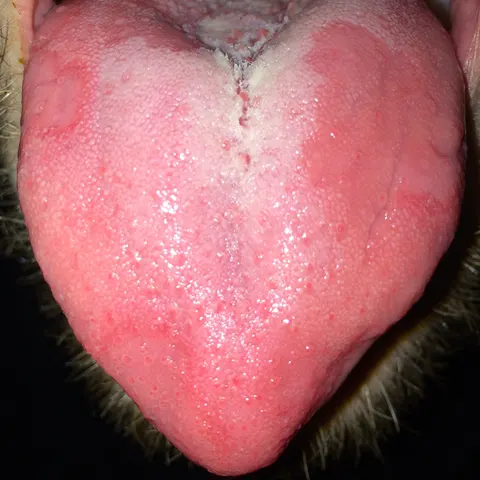
Geographic tongue is a harmless condition in which smooth, red patches with pale borders appear on the tongue and move around over days or weeks, so the surface looks like a map. Doctors call it benign migratory glossitis. Studies estimate it affects about 1 to 5 in every 100 people, and it's more common in children. It isn't contagious, and it isn't linked to cancer.
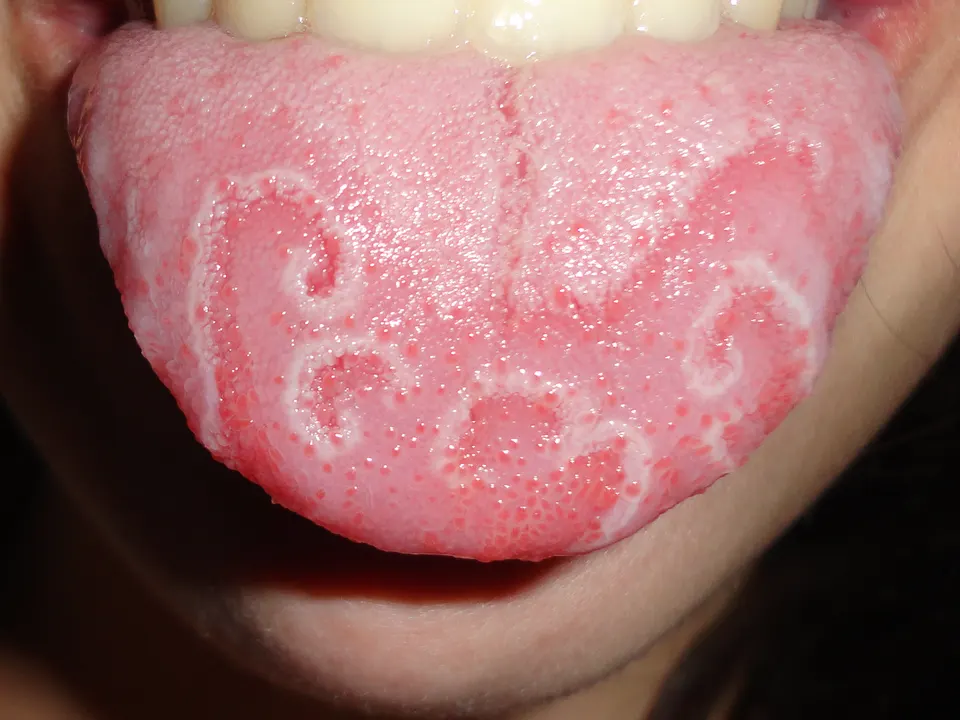
If you've just noticed it, it can still feel unsettling. Below you'll find what it looks like, what may set it off, what can ease the soreness and when it's worth seeing a dentist.
What does geographic tongue look like?
The top of your tongue is covered in tiny bumps called papillae. In geographic tongue, some of them flatten out for a while, leaving smooth patches. Typical signs:
- Smooth, red or pink patches on the top and sides of the tongue
- White or yellowish borders around them, often slightly raised
- Patches that move: they change shape, size and place over days or weeks, healing in one spot and appearing in another
- Quiet phases: the tongue can look normal for weeks or months before the patches return
- Deep grooves at the same time in some people, called fissured or cracked tongue
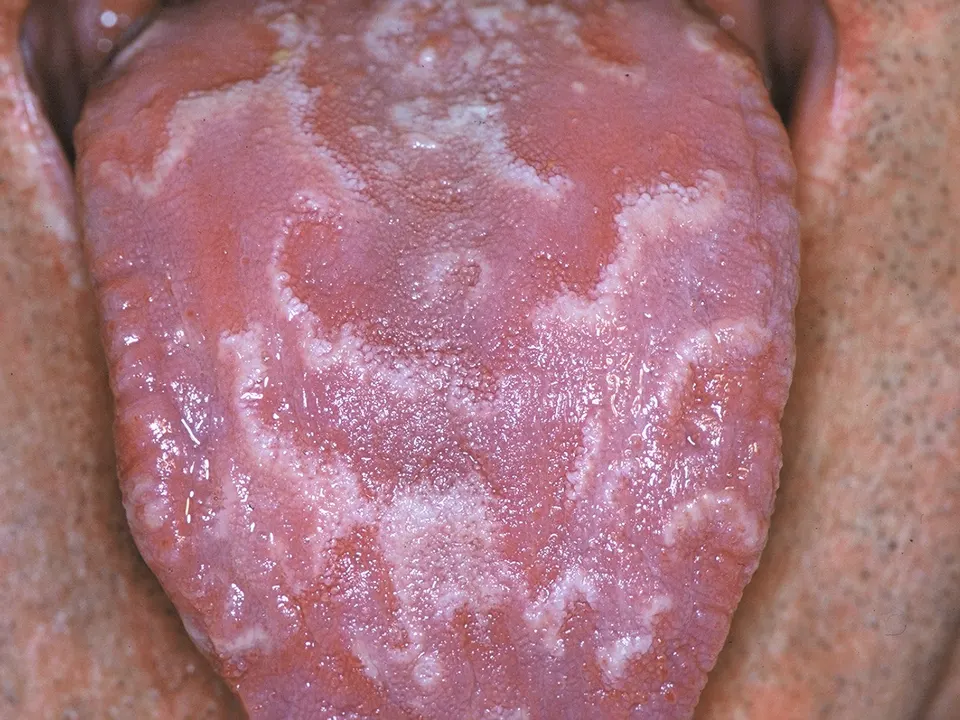
That movement is what sets it apart from most other tongue changes, and it's why it is also called “map tongue” or migratory glossitis. The same tongue can look quite different from one week to the next:
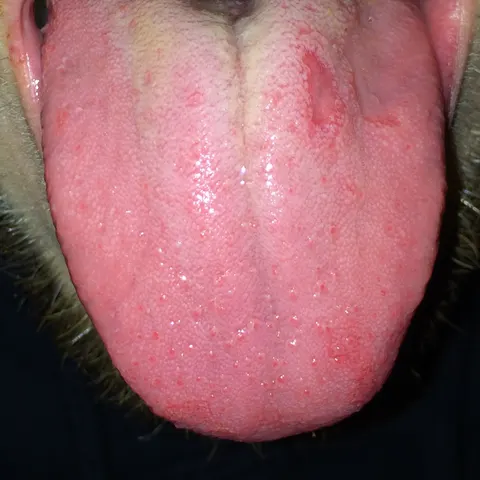 Day 0
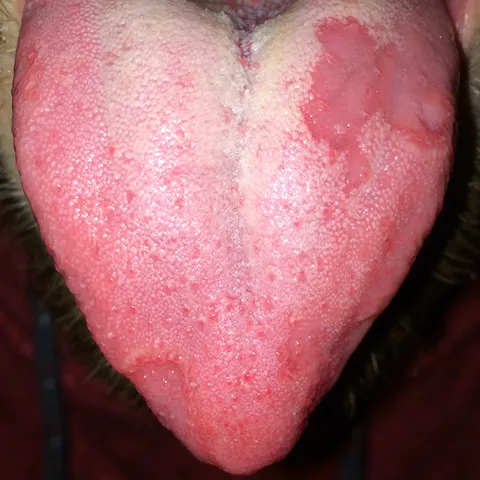 Day 2
 Day 6
Is geographic tongue serious?
No. Geographic tongue is benign: it doesn't damage the tongue, doesn't turn into cancer, and can't be passed on by kissing or sharing food and drinks. It isn't an infection. Many people only learn they have it when a dentist mentions it.
Geographic tongue symptoms
Most people feel nothing at all. Others notice symptoms mainly during a flare, a phase when the patches appear or spread:
- Burning, stinging or sensitivity, especially with spicy, sour or very hot food and drinks
- Mild soreness where patches are active
- Discomfort with strongly flavored toothpaste, mouthwash or alcohol
The discomfort usually comes and goes with the patches.
What causes geographic tongue?
The exact cause isn't known. It behaves like an inflammation of the tongue's surface that flares up and settles down on its own. Research has found it more often in people with:
- Psoriasis: under a microscope, the patches look much like psoriasis of the skin, and people with psoriasis have geographic tongue more often. Most people with geographic tongue don't have psoriasis, though.
- Fissured (cracked) tongue
- A family history of geographic or fissured tongue
- Allergies such as asthma, eczema or hay fever
- Hormonal changes, for example during pregnancy or with birth control pills
- Emotional stress: flares often follow a stressful time
Diabetes and low levels of some nutrients have also been studied, with mixed results. If you suspect a deficiency, ask your doctor for a blood test rather than taking high-dose supplements on your own. Geographic tongue also seems to be less common in smokers, which is no reason to start smoking.
Common flare triggers
Triggers differ from person to person. The ones people mention most:
- Spicy food and hot sauces
- Sour and acidic foods: citrus, tomatoes, vinegar, sour candy
- Very hot food and drinks
- Alcohol, including alcohol-based mouthwash
- Strong flavors in toothpaste or gum: cinnamon, strong mint, whitening pastes
- Stressful weeks, short sleep, being run down or ill
Geographic tongue or something else?
A few other tongue conditions can look similar at first glance. The quickest clue: geographic tongue patches move within days.
Geographic tongue
Harmless patches where the tiny bumps on the tongue are temporarily missing.
- Looks like
- Smooth red patches with pale, wavy borders
- Key sign
- Patches move and change within days
Geographic tongue vs. oral thrush
A yeast infection in the mouth, common in babies, after antibiotics or with steroid inhalers. It's treated with antifungal medicine.
- Looks like
- A creamy white coating
- Key sign
- Wipes off and may leave a sore red spot
Geographic tongue vs. leukoplakia
A thickened white patch, often linked to smoking or alcohol. Usually harmless, but it can be an early warning sign, so it always needs a check.
- Looks like
- A white patch
- Key sign
- Doesn't wipe off and doesn't move
Geographic tongue vs. oral lichen planus
A long-lasting inflammation driven by the immune system. It isn't contagious; a dentist keeps an eye on it.
- Looks like
- Lacy white lines, often inside the cheeks too
- Key sign
- Lines rather than smooth patches
Geographic tongue vs. glossitis from low nutrients
The whole tongue gets inflamed, often from low iron, vitamin B12 or folate. It settles once the deficiency is treated.
- Looks like
- The entire tongue smooth, red and sore
- Key sign
- Affects the whole surface and doesn't move around
Geographic tongue vs. canker sores
Small sores that heal on their own within one to two weeks.
- Looks like
- Round, painful sores with a white center and a red edge
- Key sign
- Open sores rather than smooth patches
Not sure which one you're looking at? A dentist can usually tell at a glance.
What helps with geographic tongue?
Most people need no treatment. When it's sore, these steps may help:
- Notice and avoid your own triggers during flares.
- Switch to a mild toothpaste without strong flavors or whitening agents, and an alcohol-free mouthwash.
- Choose cool, soft, mild food while patches are active.
- Keep brushing gently and skip harsh tongue scraping on sore areas.
If the discomfort lasts, a dentist or doctor may suggest a numbing gel, an antihistamine rinse, or a prescription rinse with a steroid or tacrolimus. They can also check for anything that needs treatment, such as a nutrient deficiency.
How to track your flares
Because triggers are personal, the most useful thing you can do is look for patterns. For two to four weeks, note:
- What you ate and drank, especially spicy, sour or hot food
- Your stress level and how you slept
- New toothpaste, mouthwash or medication
- Your menstrual cycle, if it applies
- A photo of your tongue each morning, in the same light
Patterns often show up quickly: a flare after a stressful week, or after a weekend of spicy food. Tongue Lens turns a daily tongue photo into a quick check-in on your sleep, stress and meals. It doesn't diagnose geographic tongue, but it can help you notice what tends to come before a flare.
How Traditional Chinese Medicine sees geographic tongue
In Traditional Chinese Medicine (TCM), looking at the tongue is one of the oldest ways practitioners read the whole person. A tongue with patches where the coating is missing is called a “peeled” or “map” tongue.
TCM traditionally links a map tongue with a depleted “Stomach and Spleen,” its terms for digestion and energy that are run down, often by irregular meals, overwork, short sleep or long-term stress. The traditional advice follows from that:
- Regular, warm, simple meals
- Enough fluids through the day
- Rest and a steady daily rhythm
- Fewer very spicy, greasy or alcoholic foods and drinks
These are traditional concepts, not medical diagnoses, and research on TCM tongue diagnosis is still limited (NCCIH). The advice overlaps with what helps many people during flares anyway: fewer irritating foods, less stress and more sleep.
When to see a doctor or dentist
- The first time you notice the patches, to confirm what it is
- If symptoms last longer than 10 days or keep getting worse
- If a patch doesn't move or change within two weeks
- If you see open sores, lumps, bleeding, or white patches that don't wipe off
- If the patches come with fever, swelling or feeling unwell
Get medical help right away if your tongue swells badly or you have trouble breathing, speaking, chewing or swallowing.
Geographic tongue in children
Geographic tongue is more common in children than in adults, and in kids it's just as harmless. A child may say that some foods “sting.” Mild, cool foods help during flares. Mention it to your child's dentist or pediatrician, and see them sooner if your child has a fever, isn't eating or seems unwell.
Frequently asked questions
Is geographic tongue contagious?
No. It isn't an infection and can't spread through kissing or sharing cutlery or drinks.
Can geographic tongue turn into cancer?
No. It's a benign condition and isn't linked to oral cancer. A patch that doesn't move or heal should still be checked by a dentist.
Does geographic tongue go away?
Patches often fade within days or weeks and come back later. In many people it comes and goes for years, and it tends to become less common with age.
Can stress cause geographic tongue?
Stress doesn't seem to cause it on its own, but flares often follow a stressful time.
What foods should I avoid with geographic tongue?
Only the ones that bother you. Common culprits are spicy, sour and acidic foods, very hot drinks and alcohol.
Is geographic tongue caused by a vitamin deficiency?
Usually not. Low B vitamins, zinc or iron have been studied with mixed results. A blood test from your doctor is the reliable way to check.
Is geographic tongue linked to psoriasis?
Yes. It's more common in people with psoriasis, and the two look alike under a microscope. Most people with geographic tongue don't have psoriasis, though.
Can I brush my tongue if I have geographic tongue?
Yes, gently. Skip harsh scraping on sore patches and avoid strongly flavored products.